How to ‘Summer-ise’ your pool
Summer-ising prepares your pool for the warmer months ahead by ensuring the water is perfectly balanced. With our handy guide and the quality, comprehensive AquaPure range of pool chemicals you’ll be the envy of your neighbourhood in no time …PLUS you’ll safeguard your chlorine, extend the life of your pool and equipment, and keep the water safe and refreshing for you and your friends and family to enjoy all season long.
Summer-ise your pool easily … in 3 simple steps.


2. Balance Your Pool
Use your test results to fine-tune your water chemistry.
Adjust your:
- pH
- Alkalinity
- Calcium Hardness
- Salt (if applicable), and
- Chlorine levels
according to the recommendations provided below.

3. Apply AquaPure UV Protector
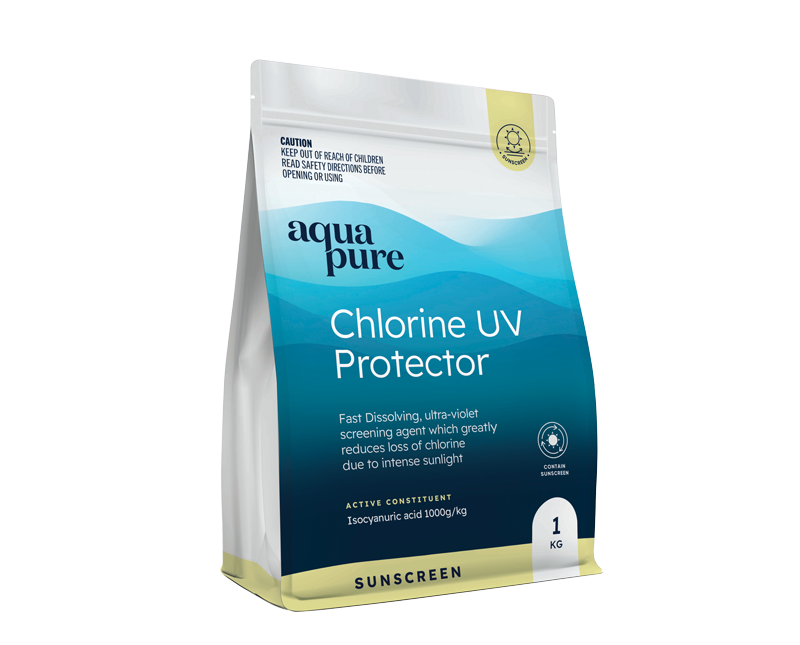
Once your water is perfectly balanced, it’s time to lock in the protection!
Retest your pool to confirm ideal levels, then apply the recommended amount of AquaPure UV Protector to shield your chlorine from the harsh summer sun — helping it last longer and work more effectively.
Balancing your pool – what you need to know
pH Levels: The ideal range is 7.2 to 7.6
- pH measures how acidic or basic (alkaline) the pool water is.
- It affects swimmer comfort, chlorine effectiveness, and equipment lifespan.
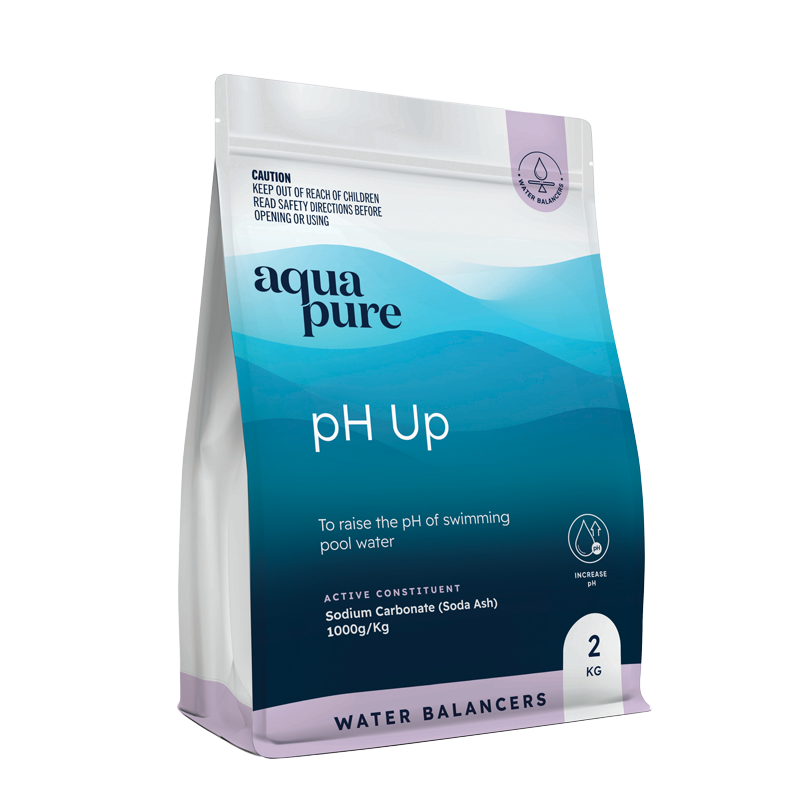
If pH is Low – below
Water is too acidic – can cause eye irritation, corrode metal fittings, and damage pool surfaces
How to fix:
Add AquaPure pH Up (Soda Ash)
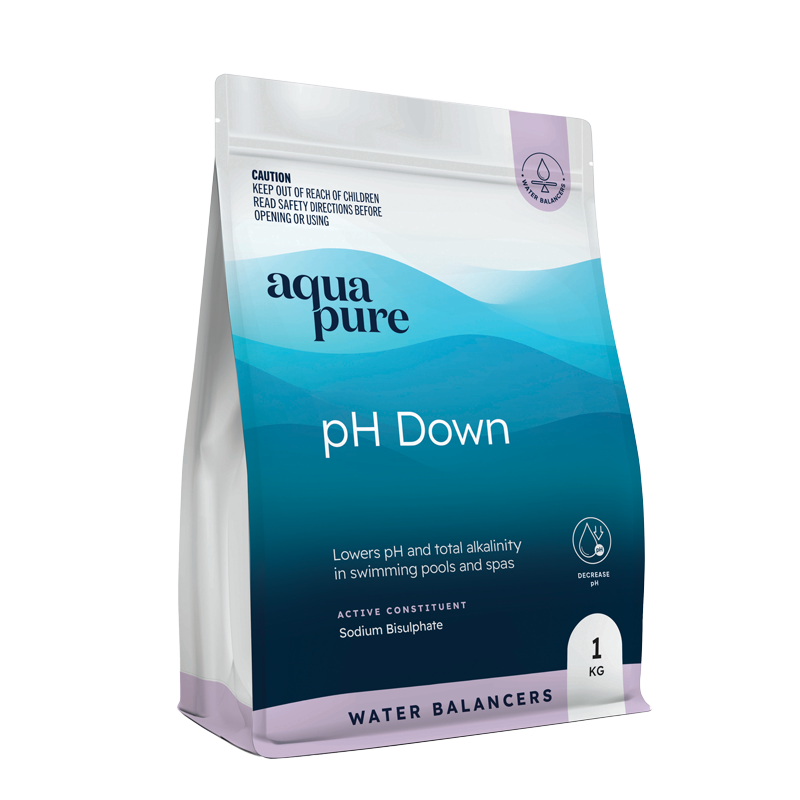
If pH is High – above
Water is too basic – can cause scale buildup, cloudy water, and reduce chlorine effectiveness
How to fix:
Add AquaPure pH Down (Sodium Bisulphate)
Alkalinity Levels: The ideal range is 80 – 150 ppm (parts per million)
- Total alkalinity acts as a buffer that stabilises pH and prevents sudden changes.
- It helps maintain consistent water chemistry.
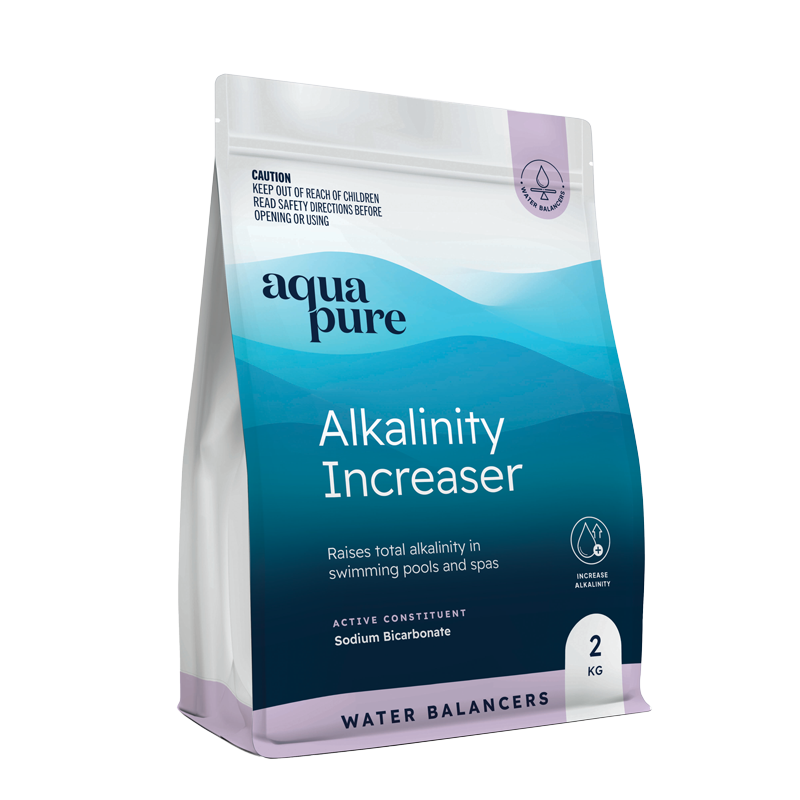
If Alkalinity is Low – below
pH may fluctuate easily, causing instability
How to fix:
Add AquaPure Alkalinity Increaser (Sodium Bicarbonate)

If Alkalinity is High – above
Water is too basic – can cause scale buildup, cloudy water, and reduce chlorine effectiveness
How to fix:
In small portions, drain and refill with fresh water to dilute alkalinity level
Calcium Hardness: The ideal range is 150 – 440 ppm (parts per million)
- Measures the amount of dissolved calcium in pool water.
- Helps protect pool surfaces and equipment from corrosion or scaling.
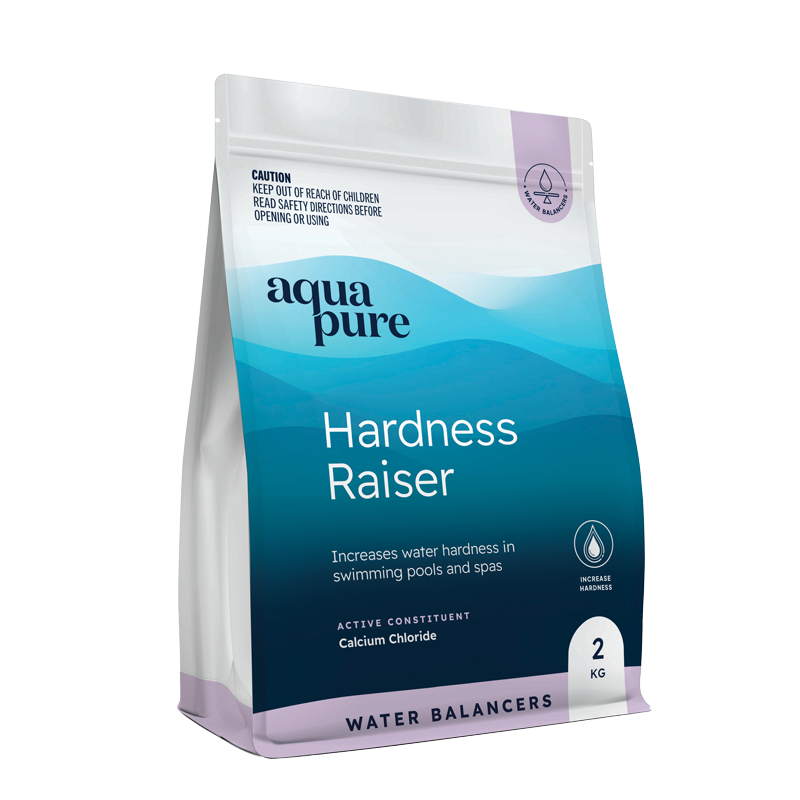
If Calcium Hardness is Low – below
Water is too soft – can corrode metal fittings, etch plaster, and damage pool surfaces
How to fix:
Add AquaPure Hardness Raiser (Calcium Chloride)
If Calcium Hardness is High – above
Water is too hard – can cause scale buildup on tiles, filters, and heating elements
How to fix:
Partially drain and refill with fresh water to dilute hardness
Regularly monitor pH and alkalinity to minimise scaling
Chlorine Levels: The ideal range is 1.0 – 3.0 ppm (standard pool ) and 3.0 – 5.0ppm (heavily used pools)
- Chlorine disinfects pool water, killing bacteria and controlling algae growth.
- Essential for maintaining safe and sanitary swimming conditions.
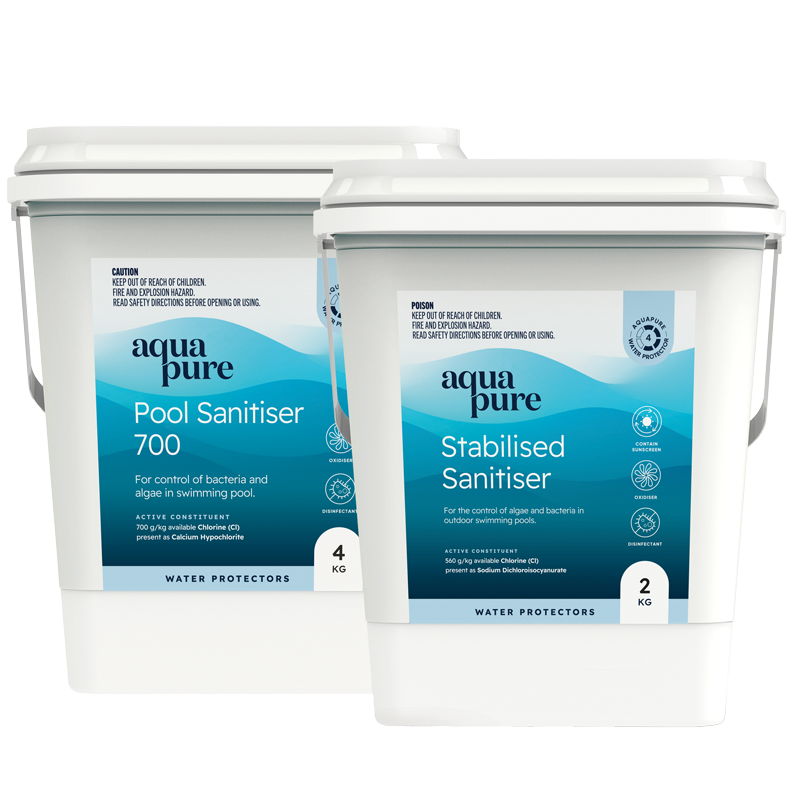
If Chlorine is Low – below
Water is not properly sanitised – can lead to algae, cloudy water, and bacterial growth
How to fix:
Add Chlorine Granules (Pool Sanitiser 700/Stabilised Sanitiser) or Liquid Chlorine as needed
Shock the pool if levels remain low or after heavy use
If Chlorine is High – above
Water may cause eye and skin irritation and have a strong chlorine smell
How to fix:
Stop adding chlorine and allow levels to drop naturally
If very high, dilute by adding fresh water
Test Your Water Regularly
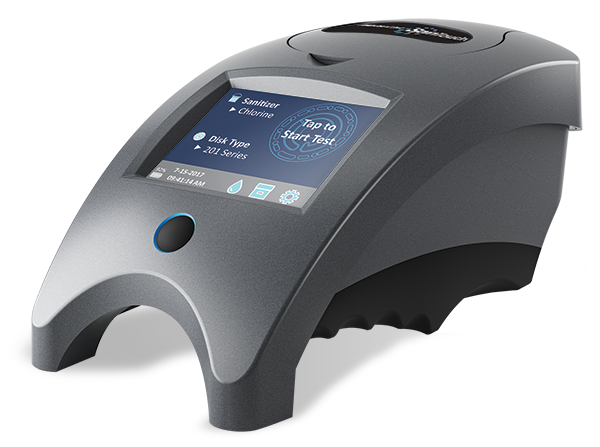
Ongoing water testing should be done monthly for salt/mineral chlorinated pools and fortnightly for pools that are manually dosed with chlorine. Always have pool water tested after heavy use, heavy rainfall, and extreme weather events.